ICYMI: the must-read intelligence report released under FOI
A landmark intelligence report linking ecosystem collapse to UK food and national security appeared this year after a Freedom of Information battle. Most people missed it, but creatives need to read it and act on it.
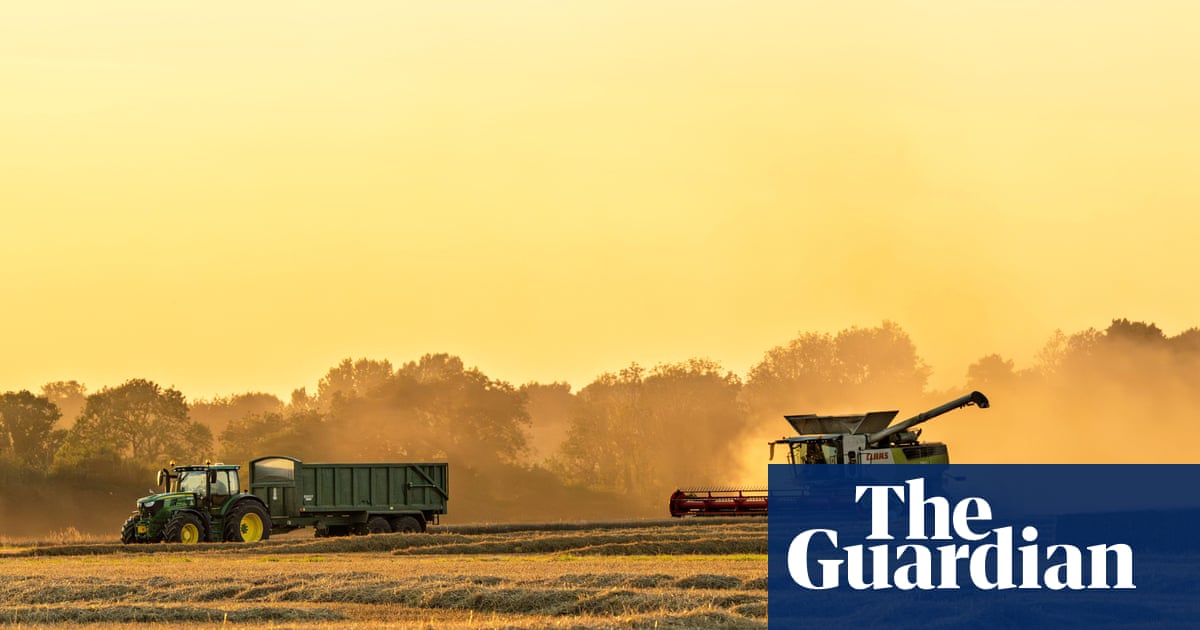
UK must stockpile food, reported the Guardian earlier this month. The article quotes leading food policy expert Professor Tim Lang speaking at the National Farmers' Union conference:
"Climate change, the floods and droughts, these are part of vulnerabilities to the just-in-time logistics system of the food system. The key finding of my report was that we created a food system in the name of efficiency, which is now inappropriate for where we are, a concentration of big companies dominating, being the choke points. This creates vulnerability. Drone warfare and software dependence make it doubly vulnerable."
That's not the first time this year the link between ecological breakdown and national security has made headlines. A landmark 14-page report published earlier this year made the same connection. It's landmark for making the explicit link between environmental degradation disrupting food, water, health and supply chains, and triggering geopolitical instability.
Coverage in the national papers has been quick to emphasise its quiet release as it finally appeared only after the think tank Green Alliance won a Freedom of Information battle. Whether it was suppressed or not, and potentially not the full report, it is still significant for its content and method.
Ecological breakdown is a threat to national security
Global Biodiversity Loss, Ecosystem Collapse and National Security is a report you may have missed. Downing Street reportedly blocked it for being "too negative." Credible sources in the media infer from its methodology the input of the Joint Intelligence Committee overseeing MI5, MI6 and GCHQ.
The language is reminiscent of IPCC reports, but the report uses the probability framework standard in intelligence assessment. When it says high confidence, that is a precise term rather than for emphasis and it means the evidence base is large and frequently revised to detail trends.
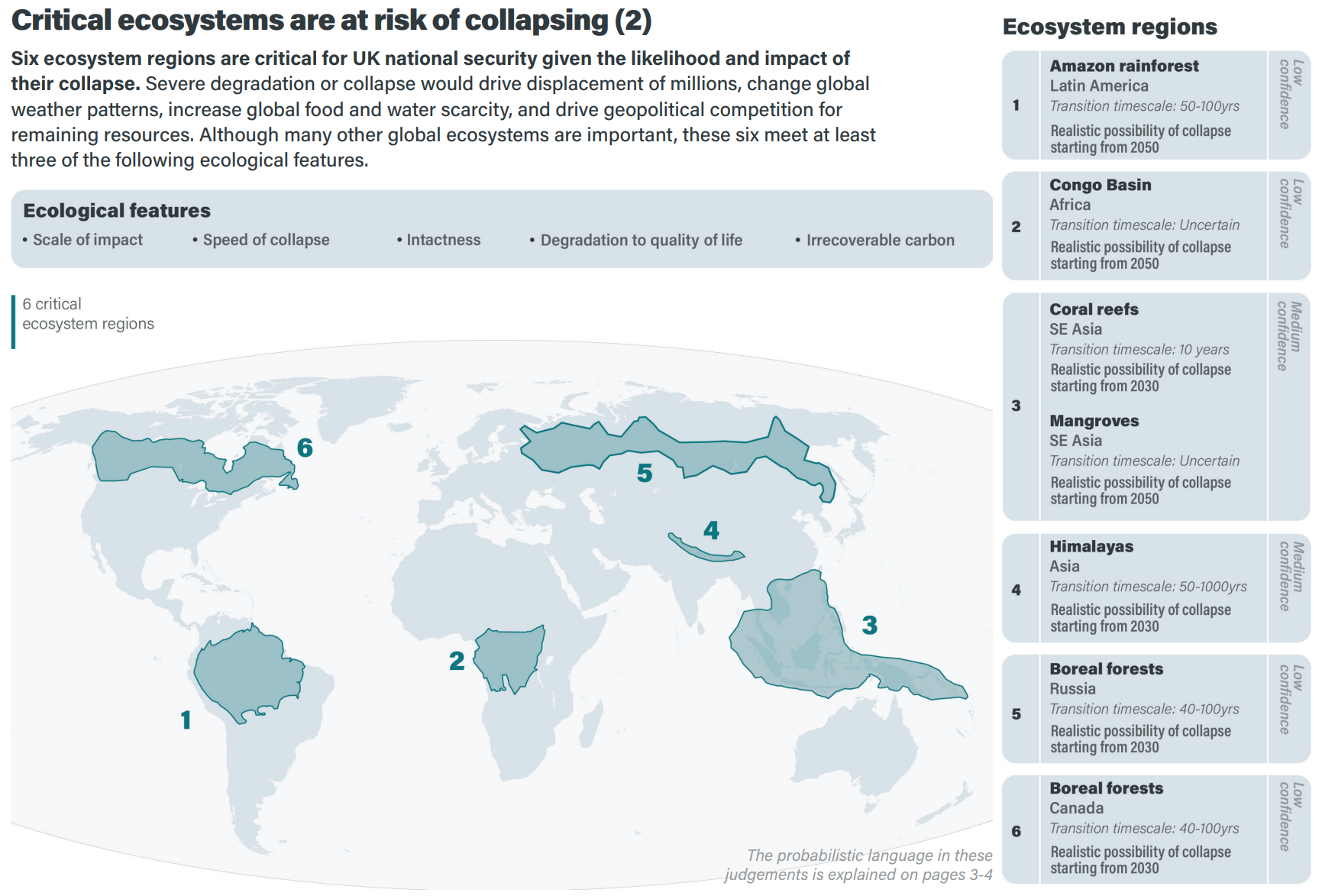
The report identifies six ecosystems of strategic importance for the UKand explores how their decline could drive cascading global impacts. The startling thing is that every critical ecosystem is on a pathway to irreversible collapse with high confidence.
These six ecosystems (the Amazon, Congo rainforest, boreal forests, the Himalayas, and South East Asia's coral reefs and mangroves) could all begin collapsing from 2030. Given Britain imports 40% of its food, the likely consequences are the focus of the last published page.
The last published page contains two under-reported sentences worth quoting in full: "Some technologies exist that could help, but need significant research, development and investment to have a chance of working at scale. Protecting and restoring ecosystems is easier, cheaper and more reliable."
Digging a little deeper reveals the link back to design
Design played a role in how this crisis crept up on us.
Architect and academic Carolyn Steel has spent over two decades mapping the relationship between food and cities. Her TED talk How Food Shapes Our Citieswas ahead of its time and feels more urgent with every passing year. Cities were physically organised around food for much of human history. Many streets are still named after what was made or sold on them, and the relationship between the city and its food supply was legible, immediate, visible. Then industrialisation happened, supply chains lengthened, supermarkets arrived, and food became something that seemed to appear abundantly, cheaply, from nowhere.
The Global Tipping Points Report 2025 engaged 200 researchers at the University of Exeter and is the scientific work that underpins the intelligence assessment. Interestingly, it identifies communication, storytelling and behaviour change as genuine levers for positive tipping points, particularly in food systems. Solar and wind have already crossed positive tipping points globally. The food system could be next, but only if enough people understand how we got here and the path out.
That is where designers, communicators and creatives come in. The gap between what scientists and intelligence analysts know and what the public understands is, in part, a disconnect by design. Steel's concept of sitopia(from the Greek for food-place) is a call to reimagine how we represent the relationship between cities, people and the natural systems that sustain them. If food's true costs and connections were visible in the way we design other products, maybe the political conditions for action would be radically different. Maybe making the invisible visible is not a peripheral contribution, but closer to the centre of it.
2. Watch Carolyn Steel's TED talk.How Food Shapes Our Cities is at ted.com. Then keep asking the question about your own work: how might you make the food and nature system more legible, or less?
3. Write to your MP. Green MP Adrian Ramsay has secured a commitment from the Leader of the House to a full parliamentary debate on the findings of this report. The timing is not yet confirmed so now is exactly the right moment to write. Ask whether they will attend the debate, push for the full report to be published, and demand a proper government response. writetothem.com makes it easy.