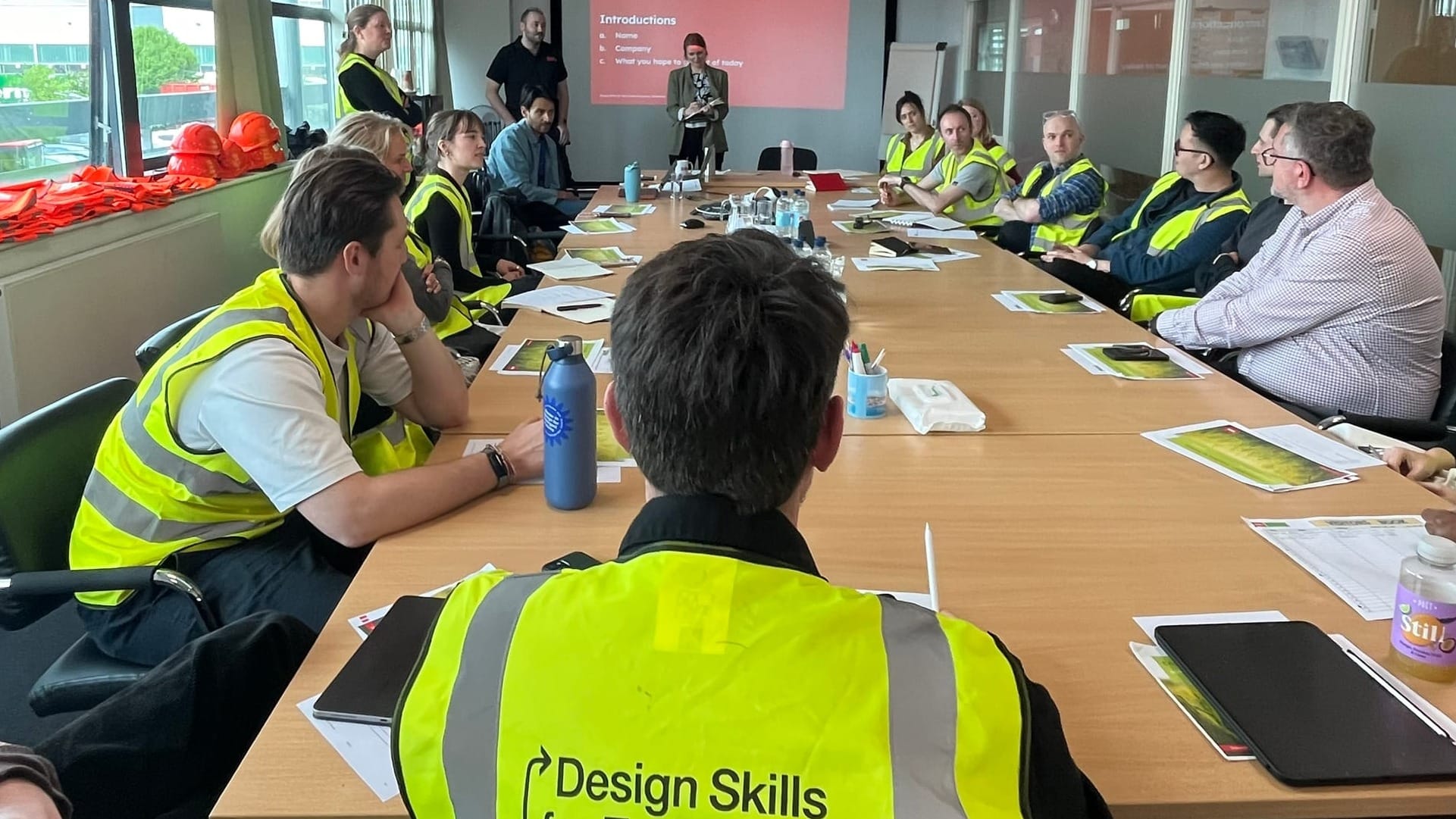
With the sprint underway, we share how URGE's Design Skills for Embedding Circularity programme is guiding designers from waste-site floors to real-world circular interventions.
The Design Skills for Embedding Circularity pilot has reached a defining moment. Since January the cohort have been visiting UK industrial waste facilities guided by URGE's circularity expert Sophie Thomas and in conversation with waste, circular business and sustainability experts, curated and hosted by URGE's design impact strategist Alexie Sommer . Now the designers are stepping into the design sprint, the phase where insight becomes intervention, and with the sprint kicking off this week we share how URGE, in partnership with CIWM, is supporting designers from waste-site floors to real-world circular interventions.
For readers joining us for the first time, this milestone builds on earlier stages of the pilot, from assembling a diverse and experienced design cohort to uncovering the realities of material flow. You can explore these earlier updates in our pieces on the pilot launch and programme foundations.
As we enter the most crucial phase yet, URGE continues to facilitate the connections and insights that make this work possible.
“The expert knowledge we’ve woven into this pilot programme is unparalleled. The designers have been exposed to the sheer complexity of opportunities and barriers to circularity, and are better informed about the design choices they can make to design out waste and design in circularity. The sprint is our first chance to put this knowledge to practise and test how the information and connections made can lead to design-led solutions and system changes"
Alexie Sommer - Co-Director, Design Skills for Embedding Circularity.
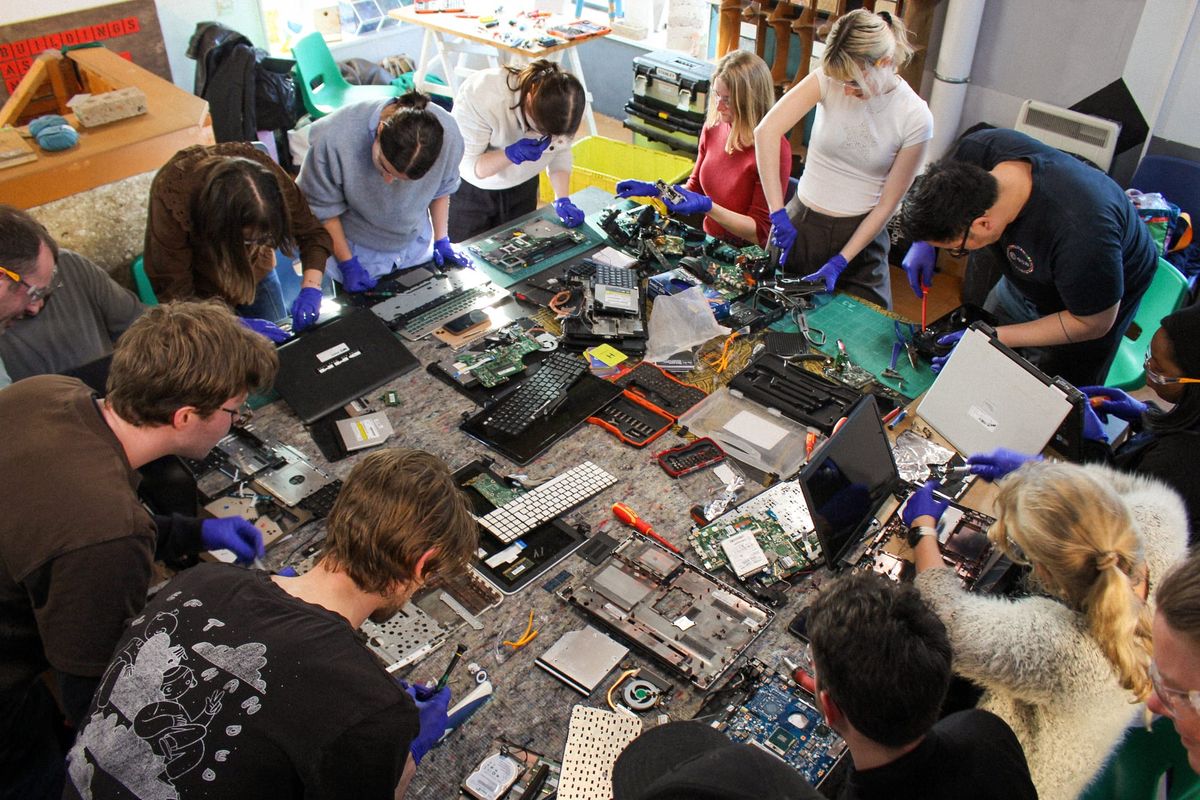
This has involved a wide network, activated through, tear downs, online conversations and practical framing, helping professional designers connect what they are seeing on the ground into impactful design decisions.
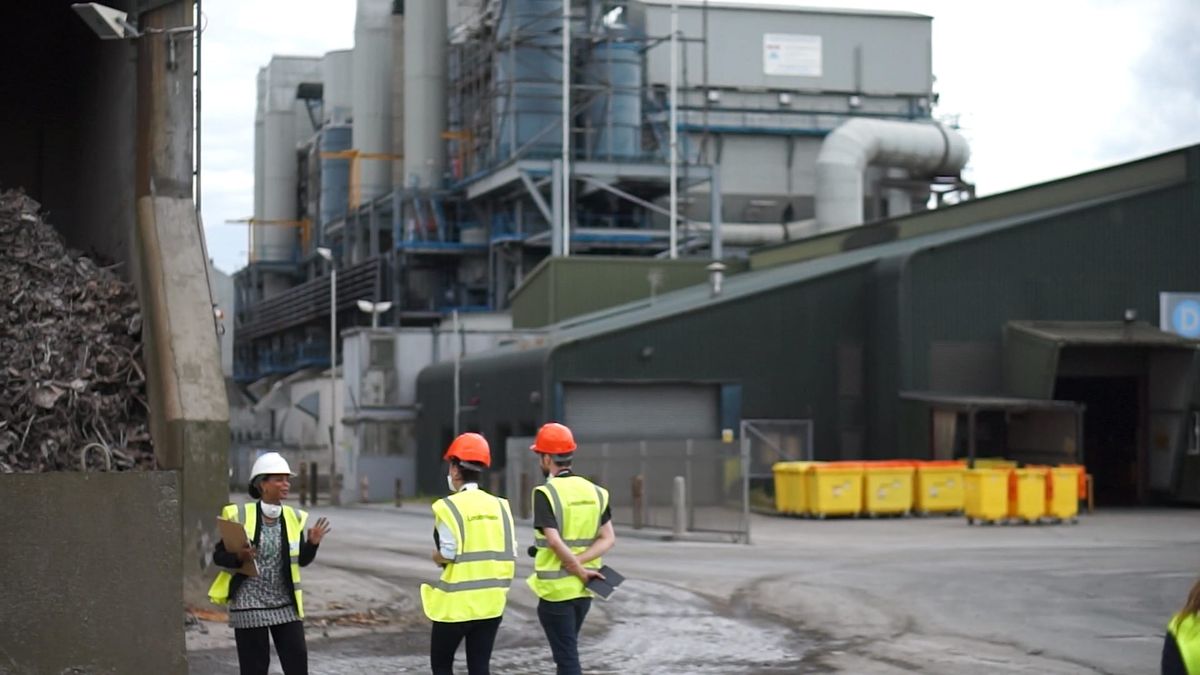
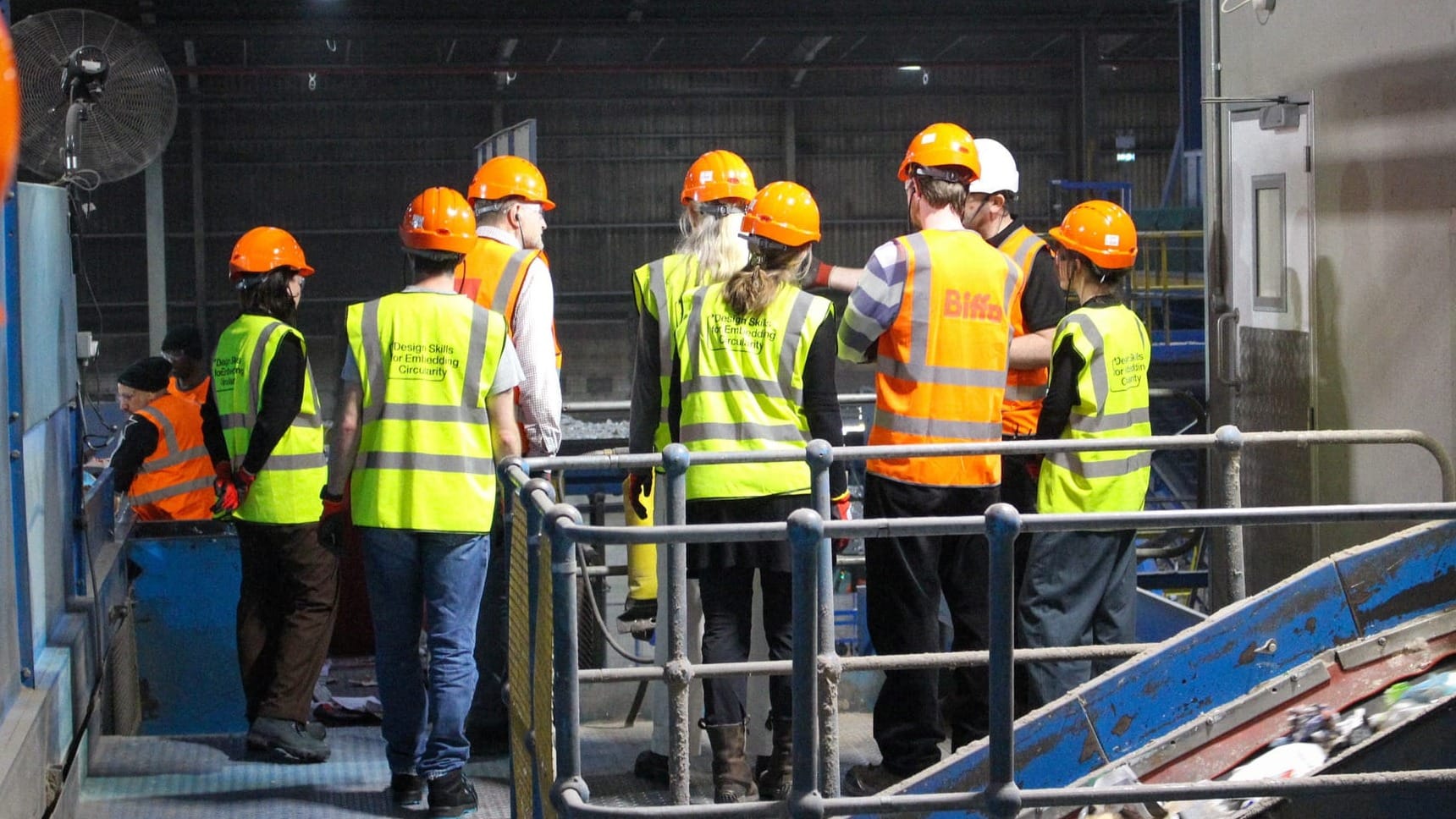
Over the last five months, the cohort has been immersed in the realities of today’s waste and resource processing systems. During this insight and data-gathering phase, their journey has taken them through material recovery facilities, WEEE (Waste Electrical and Electronic Equipment) treatment sites, energy-from-waste plants and specialist operations, each offering a close-up view of how products are handled once they leave the hands of consumers. Waste industry partners who have supported visits include Biffa, Suez, DS Smith, SWEEEP, Tech Takeback, Sherbourne Recycling, and Enovert.
Image courtesy of Oliver Lloyd
These visits have revealed a series of myth-busting insights concerning how circularity is actually happening. From the volume of valuable material lost at a MRF (Materials Recovery Facility) sorting stage from factors ranging from their small size to material complexity, to the seemingly unmovable challenges posed by coloured PET (Polyethylene terephthalate), vapes, textiles and several other problematic items, the cohort has seen first-hand how design decisions ripple out through recovery systems.
The designers have also witnessed how few intervention points exist between the user and industrial sorting. This highlights the importance of designing for repair, reuse and disassembly long before a product becomes waste. One of the design cohort participants captured this shift in perspective clearly:
“Prior to the SWEEEP visit, I was already using 'design for disassembly' as an approach in my practice. Having observed that UK WEEE waste is currently shredded into small particles, I now realise design for disassembly needs to be combined with customer facing interventions for repair or remanufacturing so that key materials can be recovered throughout the system”
Their reflection echoes a wider theme emerging across the cohort: circularity is not just technical design challenge, but a systems challenge that requires collaboration across sections.
“Policy is moving in the right direction [...] However, a vital element for progress is cross-sector collaboration and expertise – designers who understand what happens to a product at end of life, and resources and waste professionals who can influence design thinking upstream.
These connections are important in helping to move the world beyond waste. In just a few weeks, this cohort is moving from waste facility floor to design studio, and knowledge is now being applied to live challenges from Biffa and Decathlon. That’s the kind of practical, cross-sector capability that can turn circular ambition into tangible action.”
Dan Cooke, Director of Policy, Communications and External Affairs at CIWM
These early insights now form the sprint foundations, giving the participating designers not only the understanding of where circularity succeeds and where it breaks down, but more importantly where design has the power to intervene.
The design sprint
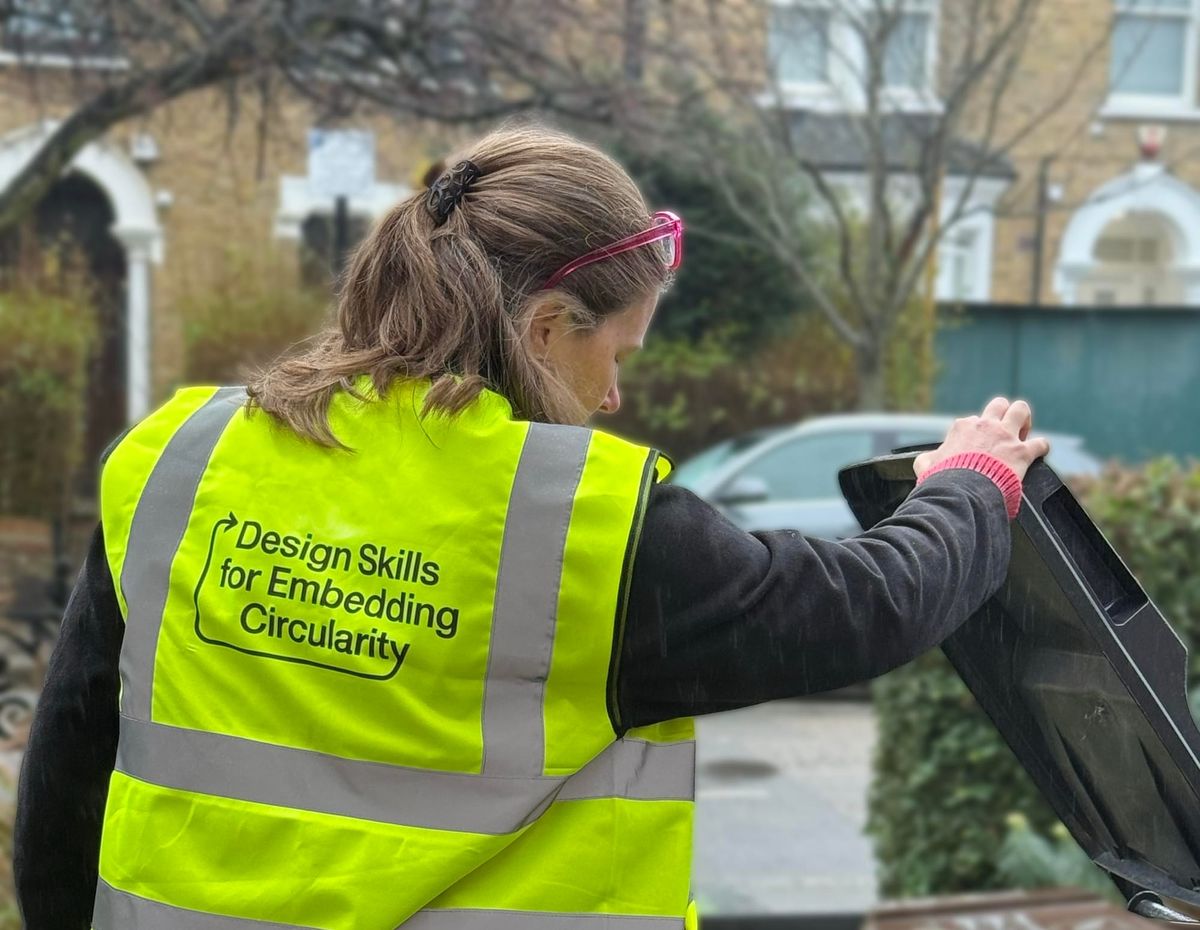
With insights in hand, the cohort are embarking on the design sprint, led by designer, educator, Design Council expert Tara Hanrahan, where they will translate that they have learnt into action. Over the coming weeks, designers will work closely with URGE and industry partners to explore practical ways to design out waste and strengthen circular outcomes.
Industry partners Biffa and Decathlon have been motivated by meeting the cohort, to set live challenges that reflect the pressures and opportunities they see in their own operations. These range from preventing vapes from entering household waste and recycling streams, to enabling easier disassembly and recovery of high‑value components in small electronics particularly lithium batteries, to rethinking festival tent waste and developing scalable reusable packaging systems for buy‑back and resale programmes. Designers will investigate these challenges from multiple angles, drawing on the technical, behavioural and systemic insights gathered throughout the pilot.
Image courtesy of Alexie Sommer
URGE’s role in this phase in crucial as we guide the cohort through the complexity, helping them frame the right questions, test emerging ideas and connect their design decisions back to the realities of waste and resource flows. The sprint is not only a chance to generate new concepts, but also a way to build the cross‑sector capability needed to make circularity work at scale.
Looking ahead
As the sprint progresses, the concepts developed by the cohort will feed into the wider ambitions of the Design Skills for Embedding Circularity pilot. The findings and outcomes will be shared at an exhibition and symposium this autumn, offering a chance to see how cross‑sector collaboration can unlock new approaches to circular design.
If you are interested in attending, partnering on future challenges or learning more about the programme’s next steps, you can reach out to URGE's Alexie Sommer and Sophie Thomas for more information. This pilot is only the beginning, and we look forward to continuing to build the skills, connections and momentum needed to move the world beyond, and design out, waste.