No climate resolutions yet? Start this year differently
Try a guiding word, a “zero” constraint, 1% daily improvements, a non-resolution or waiting to Spring. Plus approaches and 100+ climate actions to steal from for an inspired and focused 2026.
If the challenge is new perspectives, URGE has started 2026 by thinking about some of the more interesting ideas and lessons from how climate goals are set and met. Read on for approaches you can borrow, and over 100 ideas you can steal from to give your 2026 some focus.
Goals, objectives, targets, OKRs, KPIs are not for everyone. A more poetic alternative is to pick a word or phrase to guide the year ahead. Picking "regenerative", for example, could guide a year of more attention to mental and physical health while also nudging your work towards restoring natural systems and increasing their capacity to absorb human impacts.
Radical challenges surface radical solutions
Setting a target to improve by 5, 10, 20% rarely pushes thinking outside the system. If you aim to eliminate a problem entirely, you often surface more radical solutions. Consider a goal of zero waste in the “main” bin: you would have to change what you buy and what you allow into the house. Sorting your waste better would never get you there.
This simple maths can be inspiring, and it really is simple. Often associated with the success of Team GB's cyclists (and the idea of “aggregate marginal gains”), but the point applies beyond elite sport. The simplest way to think about it is additive: become 1% better than you were when you started every day for 100 days. After 100 days, you are 100% better.
Some days 1% might be hard or even impossible, but it can still be a powerful motivator.
Stop something instead of starting something
Resolutions can be too aspirational, and turn into an act of self-flagellation. They were never going to happen, and they absorb energy that could be directed elsewhere. A useful alternative is a “non-resolution”: stop something specific, free up time or attention, and focus your efforts. A recent letter from Vitsoe managing director Mark Adams put it that "what we don’t do" differentiates the company.
The letter cites no new products, no seasonal sales, no buying endorsements, and ad campaigns with no product images (only customer feedback).
Be inspired by these different takes on climate resolutions
Resolutions are a hot topic every January. URGE has picked a few different perspectives on climate resolutions from 2025 or 2026. They range from talk to your neighbours (Greenpeace) to create a disaster response plan (Time).
Be inspired by an award-winning environmental initiative
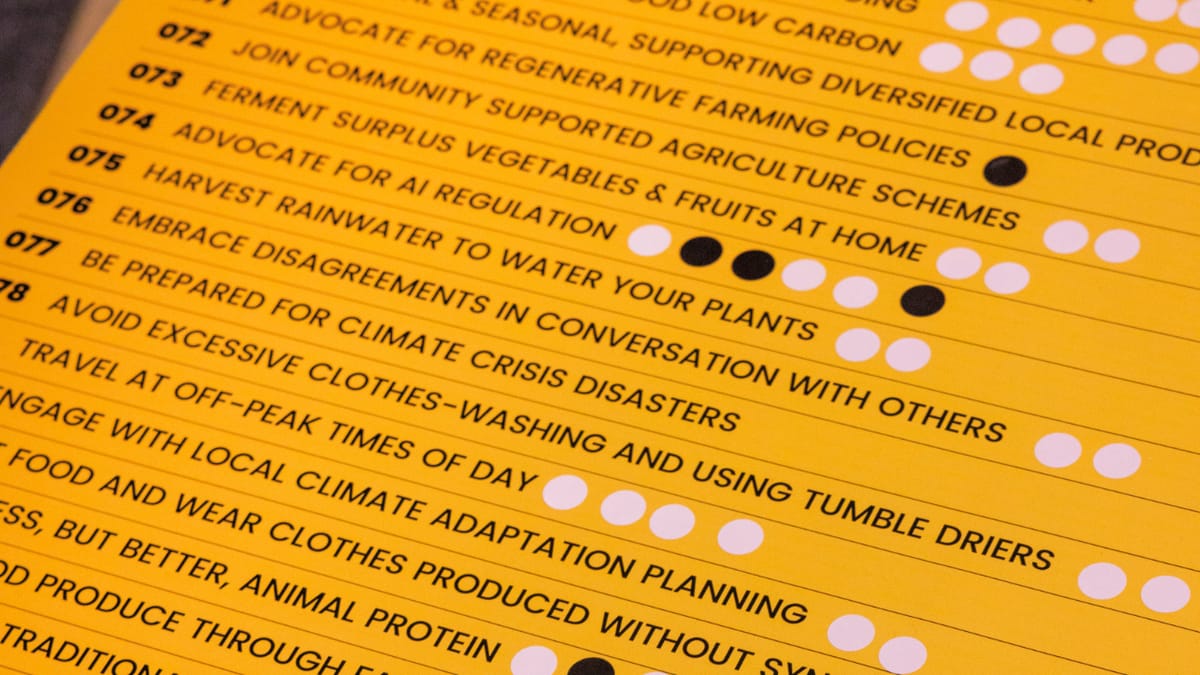
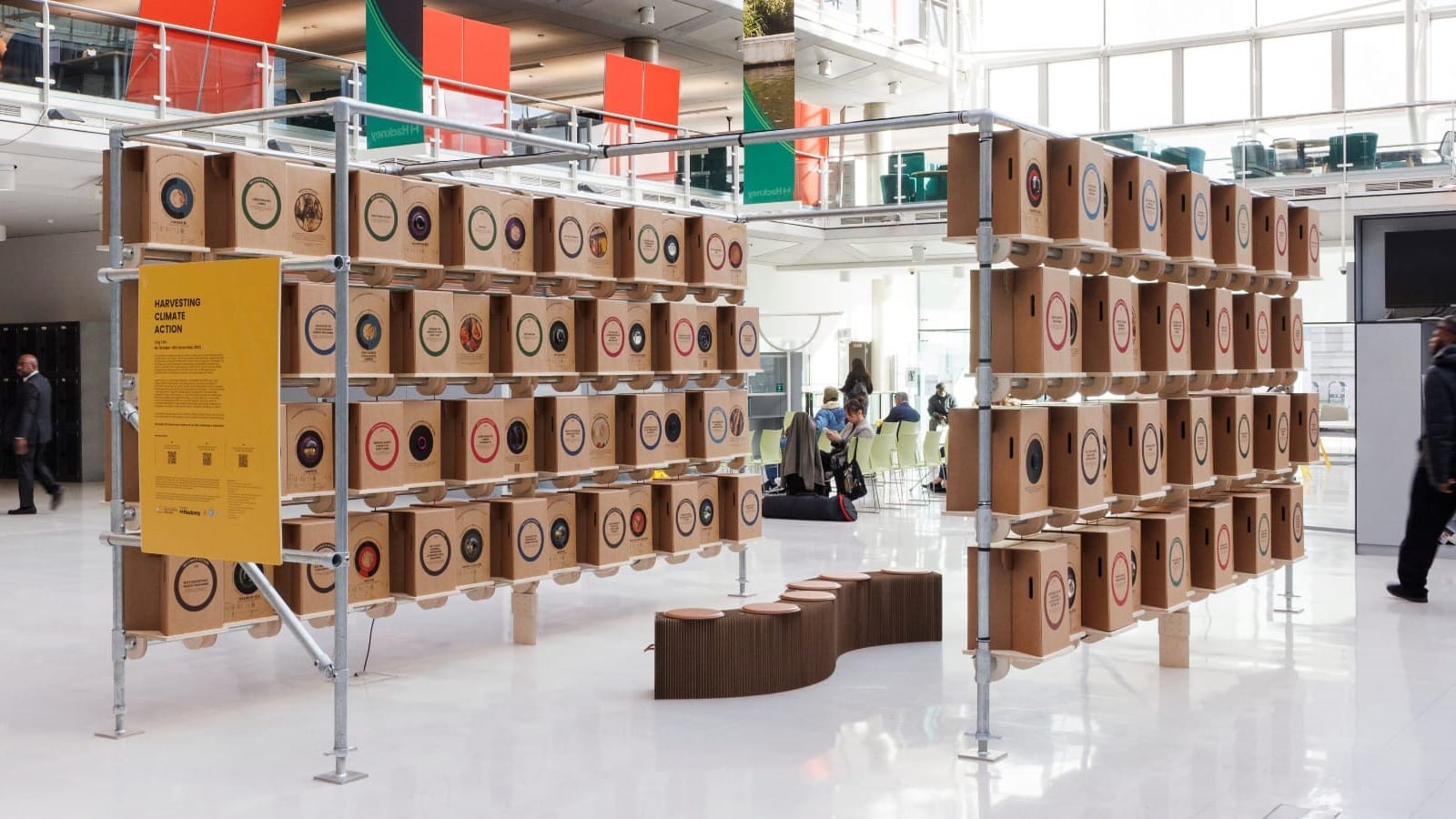
Still feeling uninspired? Have a look at the 100 Climate Actions published by Low Carbon Chinatown. The project is the work of Ling Tan and local residents in the London borough of Hackney and a mix of experts (including URGE's Alexie Sommer in her role with Design Declares). The actions include potential carbon savings, or other studies, or expert commentary to convey why they matter.
Expect actions that work at different scales, from individual habits to borough-level shifts, if you are feeling ambitious. Pick two or three to guide your 2026.